
Ueno Bank and the property market: what changes for buyers and investors in Paraguay
Che Róga Porã, rating agencies, economists and what we see at CALISTA: what the Ueno Bank crisis changes for buying or investing in Paraguay.
By Hélène Montourcy, Founder of CALISTA ·
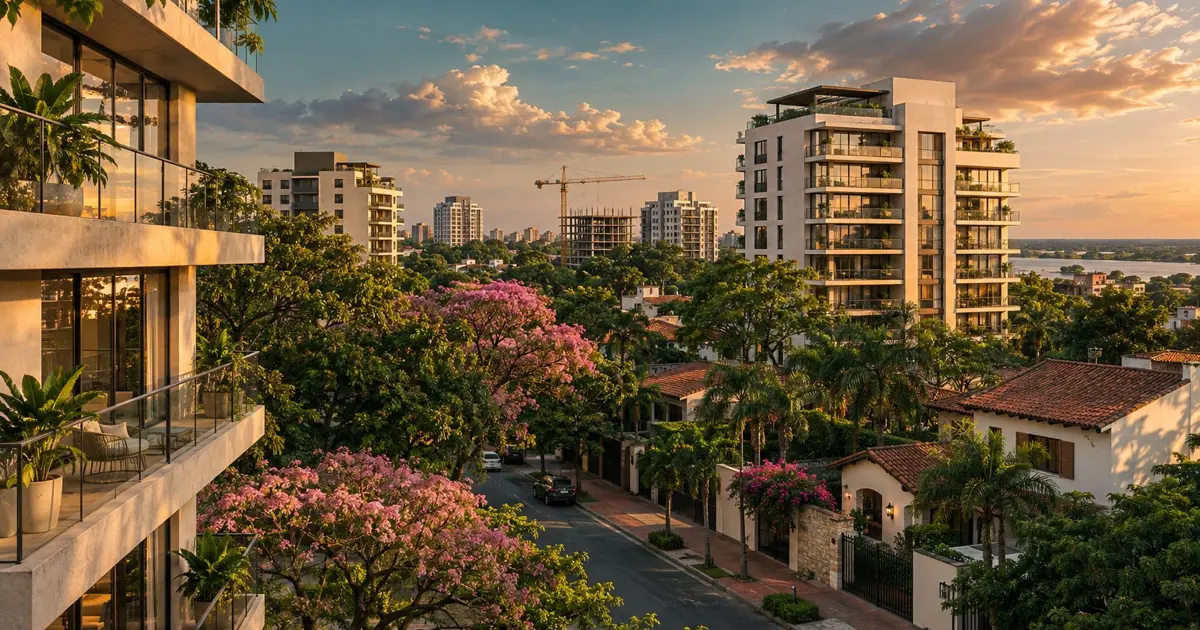
Since Ueno Bank was taken over, several clients have asked me whether this crisis could affect their property plans in Paraguay. Some are thinking of moving to the country. Others are looking for an apartment to rent out, or want to know whether they should wait before buying. To answer them, it helps to look at where the impact is already being felt, what worries economists, and what we are seeing in the transactions we handle at CALISTA.
For the practical side (deposits, rent, down payments), see our article The Ueno Bank case: what changes for landlords, tenants and buyers.
1. What happened to Ueno Bank
The Central Bank of Paraguay (BCP) announced on 3 November that it had opened resolution proceedings against Ueno Bank. The decision was taken the day before, after the BCP found that the bank’s solvency ratio had fallen below 50% of the required minimum.
According to the BCP, as reported by ABC Color on 16 November, ₲3.99 trillion (about US$645 million) was transferred to pay the advance on the deposit guarantee to 1,812,348 depositors. The advance was capped at 40 minimum wages, or ₲121,760,000 per depositor. Some accounts, mainly savings certificates (CDAs), were still being verified. The legal guarantee goes up to 75 minimum wages (₲228,300,000): the BCP plans to cover the remaining 35 with the sale of the bank’s portfolios. Anything above the guarantee depends on the resolution process and, if it comes to that, the liquidation.
The crisis also had political consequences. According to La Tercera, Santiago Peña was removed from office over alleged offences involving the bank’s funds, and Pedro Alliana became president. This change is part of the context in which rating agencies are reassessing the country’s risk.
2. The most direct impact on the sector: Che Róga Porã
So far, the most visible effect is on Che Róga Porã, the first-home financing programme. According to the Paraguayan First Home Chamber (Caprivi), quoted by InfoNegocios, Ueno Bank handled close to 80% of the sector’s disbursements. The main problem lies with second disbursements: they are released once the building reaches roof height and pay for the finishing work (plastering, floors, paint, doors and windows, plumbing). Some developers slowed down, and even temporarily stopped some sites, while waiting for these funds. There is not yet a consolidated figure for the number of homes affected.
The Development Finance Agency (AFD), according to Última Hora, confirmed that families who already have a loan keep the agreed interest rates, terms and instalments. It is also reviewing cases with pending works and disbursements: funds will be released under the approved conditions once the resolution process is over, and the AFD will announce which institution will manage the loans and how payments will be made. One option under study is to transfer the portfolio to a trust (fideicomiso).
Che Róga Porã remains open. New applications are made directly with the authorised banks, finance companies and cooperatives. For families whose loan went through Ueno Bank, the AFD has set up a WhatsApp line: 0985 979 450.
3. What about confidence in the country?
Rating agencies reacted differently. According to InfoNegocios on 13 November, S&P kept its BBB− rating with a stable outlook. Moody’s also kept Paraguay at investment grade, while raising doubts about governance and the independence of banking supervision.
Fitch withdrew its positive outlook and placed the BB+ sovereign rating on negative watch, citing the consequences of the banking and political crisis. The agency nonetheless said it does not foresee wider risks to financial stability, given the solvency and liquidity of the other systemic banks.
4. Could the impact spread to the rest of the property market?
The economists interviewed by La Tercera see things differently. Germán Rojas, a former finance minister and now chairman of Banco Basa, sees no contagion to real estate, apart from a possible slowdown in housing credit and a “wait and see” period. He does not expect demand to fall. He also points to a factor that predates the banking crisis: the guaraní’s appreciation, around 30% over the past year by his estimate, had already made some investments less attractive to foreign buyers. Dionisio Borda, also a former finance minister, considers the other banks sound but warns of a tougher scenario: Paraguay could lose its investment grade and attract less foreign investment.
For its part, 5Días suggests that some developers could face delays and that buyers with their own funds could find more room to negotiate.
In practice, these are different segments. A family waiting for the next Che Róga Porã disbursement may have to put off finishing their home. A buyer living abroad, with their own funds, looking for an apartment to rent out in Asunción, usually looks at a different kind of property. For them, the questions are how much they can pay, what rental income they can expect and, if buying off-plan, whether the developer has the means to finish the building. Paying cash settles the buyer’s financing. Financing the construction is still a question for the developer.
5. My view at CALISTA
In the rentals we manage, we collected 100% of the rents due by 17 November. Since the takeover of Ueno Bank was announced, we have also closed sales with Paraguayan and foreign buyers. That is what I see in our portfolio and in the transactions we handle. At the same time, for a family with a half-finished house, a delayed disbursement has very real consequences.
If your plan is to settle in Paraguay, I would keep visiting properties. If you want to invest, I would keep running the numbers. If you find a property you like, I would decide based on the terms of that deal: the price, the availability of funds and, where relevant, the progress and financing of the construction. If any of these points is still open, I would clear it up before paying a deposit.
Three things I would watch closely:
- Liquidity. In my own business, this episode confirms that it is wise to spread the money I need to operate across several institutions.
- Paying cash. It can give you room to negotiate if the seller values a quick signing. If the funds come from abroad, check the requirements and timing of the transfer with your bank before setting the date.
- The developer. If you buy off-plan, check which projects they have delivered, how far the works have progressed and how they plan to finance the remaining stages. Ask for the contract to state what happens if delivery is delayed.
Conclusion
The most immediate property impact of Ueno Bank’s resolution is on first-home construction sites waiting for Che Róga Porã disbursements. It remains to be seen when these payments will resume and who will manage the loans. In the transactions we handle at CALISTA, rents are still being paid and sales are still closing. For anyone looking for a property today, my advice is to keep weighing your options and to confirm timelines, funds and purchase terms before committing.
Have a property in mind or an investment to assess in Paraguay? Message us on WhatsApp: we reply in English, Spanish, French and Portuguese.
Opinion piece based on information available on 17 November 2026. It is not personalised legal or financial advice.
Sources
- Central Bank of Paraguay, Banco Central inicia el procedimiento de resolución de ueno bank, 3 November 2026.
- ABC Color, Ueno Bank: tras el pago de los anticipos del Fondo de Garantía, ¿qué pasos vienen ahora?, 16 November 2026.
- InfoNegocios, Che Róga Porã busca su nuevo cauce: qué pasa con las obras que financiaba ueno bank, 13 November 2026.
- Última Hora, ¿Tenés crédito de Che Róga Porã con ueno bank? AFD habilita línea para consultas, November 2026.
- InfoNegocios, Fitch habló: retira su perspectiva positiva aunque «no prevé riesgos más amplios para la estabilidad financiera», 13 November 2026.
- La Tercera (Chile), ¿La inversión chilena en Paraguay corre riesgo ante la crisis financiera?, 15 November 2026.
- 5Días, Crisis de ueno Bank desafía la inversión inmobiliaria en Paraguay, 12 November 2026 (subscribers only).
General information: not a substitute for advice from a notary (escribano) or a lawyer.
Have a question about this topic?
Write to us: we reply personally, in English, Spanish, French or Portuguese.