
← BlogNews
The dollar is falling: who wins and who loses in Paraguay's real estate market?
n recent weeks, two news headlines have summed up the situation. According to 5Días, the dollar “continues its decline, reaching G. 5,725 in the interbank market.”
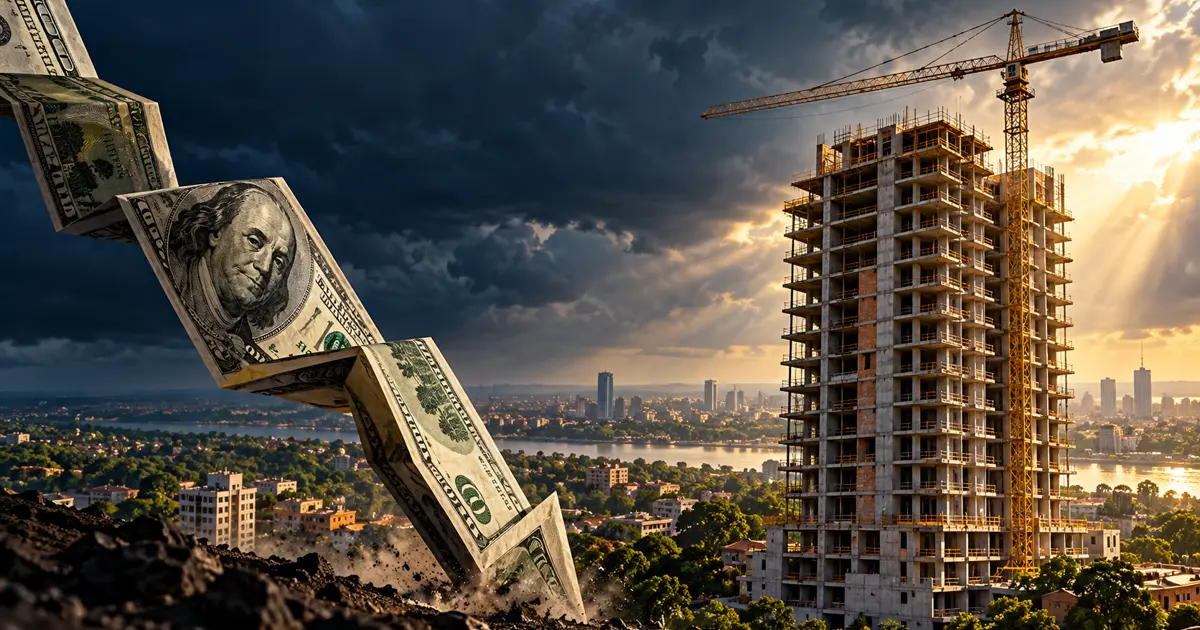
780 AM / Mega TV published an article titled “Falling dollar challenges the property sector.” In that article, Raúl Constantino, president of the Paraguayan Chamber of Real Estate Developers (CAPADEI), explains that around 90% of construction costs are denominated in guaraníes. According to him, construction costs have risen by approximately 20% in dollar terms compared with last year.
As a real estate agency and the developers behind the Kalypso project, we experience this every day. Here is what we are seeing.
The official figures
According to the reference exchange rate published by the Central Bank of Paraguay (BCP):
| Date | Guaraníes per US dollar |
|---|---|
| January 2, 2026 | 6,627.60 |
| May 4, 2026 | 6,047.81 |
| September 1, 2026 | 5,914.97 |
| October 7, 2026 | 5,751.99 |
Between January 2 and October 7, the number of guaraníes received for one dollar fell by 13.2%. Viewed the other way around, the guaraní appreciated by 15.2% against the dollar.
The developer: costs in guaraníes, prices in dollars
In Paraguay’s property market, homes are often priced in dollars, while a large proportion of construction expenses—materials, wages, and social security contributions—are paid in guaraníes. A falling dollar therefore increases the dollar value of those expenses, even when local prices remain unchanged.
- Example: a phase of construction costing 1 billion guaraníes represented approximately USD 150,884 in January. At the October 7 exchange rate, it represents around USD 173,853—an increase of 15.2%, solely due to the exchange rate.
An additional rise in local costs in guaraníes could bring that increase closer to the 20% mentioned by CAPADEI. Our example illustrates the mechanism; it does not, on its own, measure the actual change in construction costs.
These higher costs may lead developers to raise dollar prices for new projects. They also put pressure on margins for developments sold off-plan at fixed dollar prices when construction expenses still have to be paid in guaraníes.
The buyer earning in guaraníes: a favorable opportunity
If the dollar price remains unchanged, a property now costs fewer guaraníes for a buyer earning in that currency.
- Example: an apartment priced at USD 100,000 represented 662.8 million guaraníes on January 2, compared with 575.2 million on October 7—a reduction of approximately 87.6 million, solely due to the exchange rate.
This advantage may be particularly relevant for developments already launched or completed whose dollar prices remain unchanged. For new launches, a higher selling price may reduce or even eliminate the exchange-rate benefit.
The landlord collecting rent in dollars
If the rent amount remains unchanged, rental income collected in dollars now yields fewer guaraníes to cover building fees, maintenance, and taxes paid in local currency. It is therefore useful to review each property’s finances, comparing income and expenses in both currencies.
Our perspective at CALISTA
- Calculate in both currencies. Buying, selling, or renting decisions should be assessed in guaraníes and dollars, taking into account the currencies of your income and debts.
- Read off-plan purchase contracts carefully. Fixed or adjustable prices, payment schedules, and the currency of each installment directly affect the final cost and how exchange-rate risk is shared.
- Do not bet on the exchange rate. No one can guarantee whether the dollar will continue to fall or rise again. When assessing a property investment, consider its location, quality, rental return, and financing terms.
Would you like to know what your property is worth today, in guaraníes and dollars? Ask our team for a property valuation.
This article is for information purposes only and does not constitute financial advice.
General information: not a substitute for advice from a notary (escribano) or a lawyer.
Have a question about this topic?
Write to us: we reply personally, in English, Spanish or French.